· RPG · 6 min read
Scout Adventure RPG - Game Mechanics
A beginner-friendly d10 RPG system designed specifically for Cub Scouts and young children. Simple mechanics that focus on fun and imagination.
Downloads
Download the Complete RPG Mechanics PDF - Print-ready version with all rules and quick reference cards.
Download Character Sheet - One-page character sheet for players.
Download DM Reference - Quick reference guide for the Guide (Game Master).
Introduction
Welcome to the Scout Adventure RPG, a simple tabletop role-playing game designed specifically for young players, particularly Cub Scouts. This system uses a single d10 (10-sided die) and focuses on collaborative storytelling, problem-solving, and having fun together.
What is a Tabletop RPG?
A tabletop RPG is a game where players describe their characters’ actions in a shared story. One person acts as the Guide (Game Master), setting up scenarios and describing the world, while the other players take on the roles of characters in the adventure.
The Three Attributes
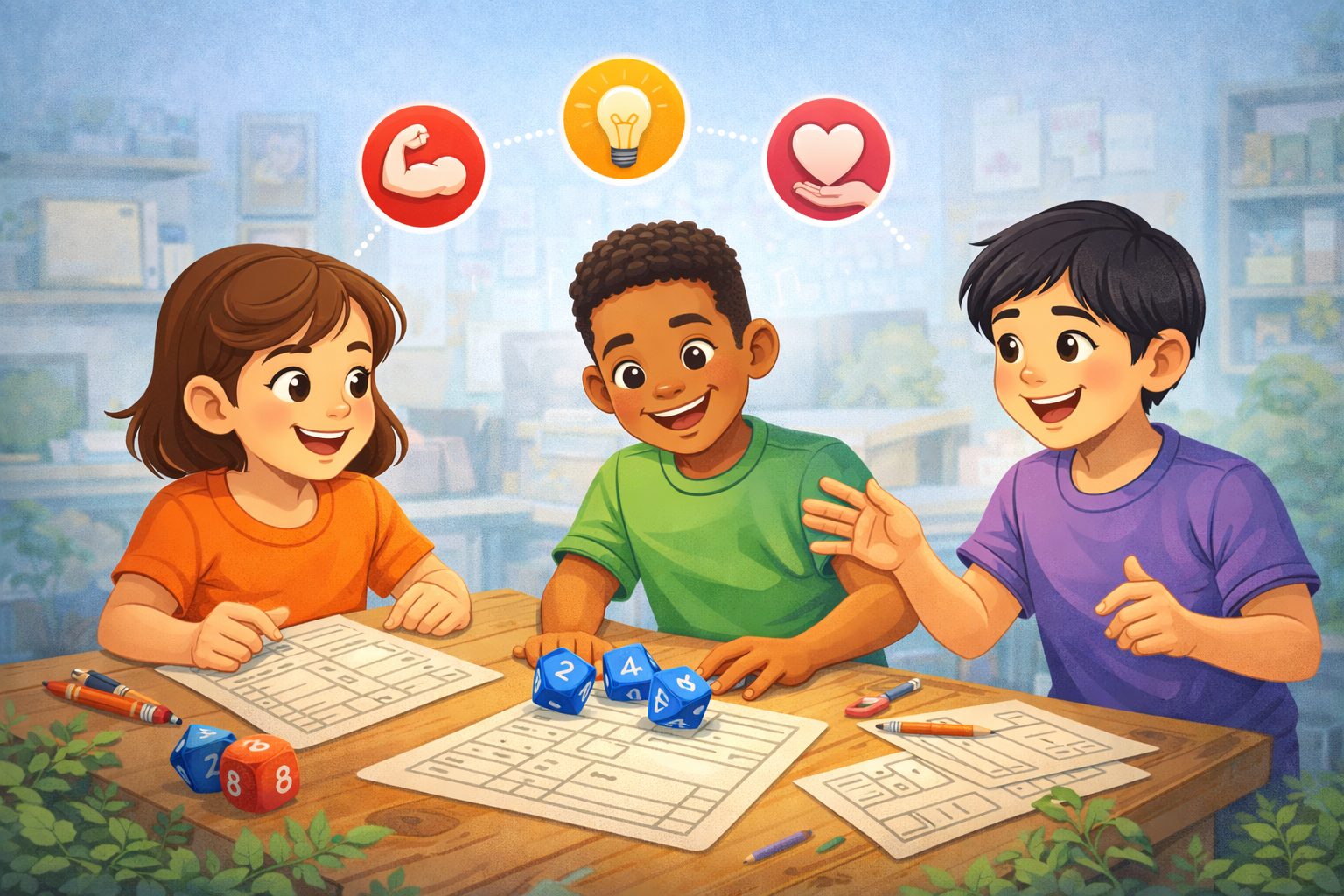
Every character in the Scout Adventure RPG has three core attributes:
Strong 💪
Physical abilities like climbing, running, lifting, and athletic challenges. Use Strong when your character needs to:
- Climb a tree or rope
- Carry heavy equipment
- Push through physical obstacles
- Win a tug-of-war
- Navigate rough terrain
Smart 🧠
Mental abilities like problem-solving, observation, and knowledge. Use Smart when your character needs to:
- Solve a puzzle or riddle
- Remember important information
- Notice hidden details
- Figure out how something works
- Plan a strategy
Kind ❤️
Social abilities like helping others, teamwork, and leadership. Use Kind when your character needs to:
- Convince someone to help
- Calm down a worried friend
- Work together as a team
- Make a new friend
- Show compassion or understanding
Assigning Attributes
Each character starts with +2, +1, and +0 to assign to their three attributes:
- Put +2 in what your character is best at
- Put +1 in what they’re pretty good at
- Put +0 in what they’re still learning
Rolling the Dice
When a character attempts something challenging, they roll a d10 and add the relevant attribute.
Basic Rolls
- Describe what your character wants to do
- The Guide tells you which attribute to use
- Roll 1d10 and add your attribute bonus
- Compare to the difficulty target
Success Threshold
Roll 7 or higher to succeed!
| Result | Outcome |
|---|---|
| 10+ | Great Success! You succeed with a bonus effect |
| 7-9 | Success! You accomplish what you set out to do |
| 4-6 | Partial Success You succeed, but with a complication |
| 1-3 | Setback Something goes wrong (but never catastrophic!) |
Difficulty Levels
The Guide can adjust the target number for especially easy or hard tasks:
| Difficulty | Target | Example |
|---|---|---|
| Easy | 5+ | Climbing a ladder |
| Normal | 7+ | Crossing a log bridge |
| Hard | 9+ | Climbing a steep cliff |
| Very Hard | 11+ | Extraordinary feats (rare!) |
Note: For young players, keep most challenges at Easy or Normal difficulty.
Teamwork
Teamwork is at the heart of Scouting and this RPG system!
Helping Each Other
When one player helps another with a task:
- The helping player describes how they assist
- The main player rolls with a +2 bonus
- Both players share in the success (or setback)
Group Challenges
For tasks the whole group attempts together:
- Each player describes their contribution
- Everyone rolls their dice
- Count the number of successes
- Need at least half the group to succeed
The Scout Motto: Be Prepared
Before a challenging situation, players can describe how they prepare:
- “I brought rope in my pack!”
- “I learned about this in my last den meeting!”
- “I practiced this at home!”
If the Guide agrees it makes sense, grant a +1 bonus to the roll.
Setbacks
In the Scout Adventure RPG, failure is never the end—it’s a learning opportunity!
What Happens on a Setback?
When a roll results in a setback (1-3), something goes wrong, but:
- Never harmful or scary for young players
- Always recoverable with another attempt or help
- Often funny or leads to interesting story moments
Example Setbacks
| Attribute | Setback Ideas |
|---|---|
| Strong | Trip and fall (no injury), get tired and need a rest, drop something |
| Smart | Misread a clue, get confused, need to try a different approach |
| Kind | Miscommunication, someone gets the wrong idea, awkward moment |
Turning Setbacks into Stories
Setbacks should create story opportunities:
- “You slip on the wet rocks—what do you grab onto?”
- “The puzzle doesn’t make sense yet—what detail might you have missed?”
- “Your joke didn’t land the way you hoped—how do you recover?”
Modes of Play
The Scout Adventure RPG has two main modes:
Campfire Mode 🏕️
Use for exploration, conversation, and problem-solving:
- Players take turns describing their actions
- The Guide responds to each action
- Dice rolls happen when there’s uncertainty
- Pacing is relaxed and collaborative
Best for: Beginning of adventures, exploring locations, talking to characters, solving puzzles
Action Mode ⚡
Use for exciting, time-sensitive situations:
- Go around the table, each player gets one action per turn
- Actions resolve quickly
- Keep energy high and descriptions short
- Switch back to Campfire Mode when the excitement passes
Best for: Chase scenes, competitions, urgent situations, climactic moments
Switching Modes
The Guide decides when to switch modes:
- “Suddenly you hear a crash! Let’s go to Action Mode!”
- “The danger has passed. Back to Campfire Mode—what do you want to explore?”
Adventure Structure
Most Scout Adventure RPG sessions follow a simple three-act structure:
Act 1: The Call to Adventure
- Introduce the situation and goal
- Establish what’s at stake
- Get the players motivated and engaged
- Duration: About 10-15 minutes
Act 2: Challenges Along the Way
- Present 2-3 challenges or obstacles
- Allow different attributes to shine
- Include opportunities for teamwork
- Build toward the climax
- Duration: About 30-40 minutes
Act 3: The Resolution
- The final challenge or discovery
- Resolution of the main goal
- Celebration and reflection
- Duration: About 10-15 minutes
Session Length
Target session length: 45-60 minutes
For younger players (ages 5-7), aim for 30-40 minutes.
Scaling for Mixed Ages
Scout dens often include players of different ages and abilities. Here’s how to adapt:
For Younger Players (Ages 5-7)
- Simplify choices: “Do you want to climb or go around?”
- More helper NPCs (Guide-controlled friends)
- Shorter sessions with clear stopping points
- More physical movement during play
- Use Easy difficulty more often
For Older Players (Ages 9-11)
- More complex puzzles and choices
- Leadership opportunities (helping younger players)
- Harder difficulty options
- More player agency in the story
- Introduce optional advanced rules
Mixed Groups
- Pair older and younger players as “buddies”
- Give different roles based on age (leader, scout, helper)
- Use tiered challenges (easy path and hard path)
- Let older players help younger ones with dice math
Group Dynamics
Player Count
| Players | Notes |
|---|---|
| 2-3 | Intimate, fast-paced, every player is important |
| 4-5 | Ideal group size for most adventures |
| 6+ | Consider splitting into teams or adding a co-Guide |
Keeping Everyone Engaged
- Call on quiet players: “What does [name] do?”
- Give each character a moment to shine
- Use a talking stick or turn order for structured moments
- Take short breaks (every 20-30 minutes for young players)
Managing Energy
- Start with a brief physical activity to burn energy
- Include moments where characters can move around
- Allow fidget toys or quiet activities during others’ turns
- End on a high note before attention wanders
Guide Tips
The Golden Rule
Say “Yes, and…” whenever possible. If a player has a creative idea:
- “Yes, and that gives you a +1 bonus!”
- “Yes, and you discover something interesting…”
- “Yes, but you’ll need to roll for it!”
Pacing
- Watch for restlessness—time for Action Mode!
- Watch for confusion—slow down and recap
- Watch for excitement—let it play out!
- Watch for frustration—offer help or adjust difficulty
Preparation
- Read the adventure once before playing
- Have dice and character sheets ready
- Prepare any props or visual aids
- Know your players’ experience level
Improvisation
Not everything goes according to plan! When players surprise you:
- Take a breath and go with it
- Ask questions: “What does that look like?”
- Use player ideas to shape the story
- It’s okay to say “Let me think for a second”
Quick Reference Card
Rolling Dice
- Roll d10 + Attribute
- 7+ = Success
- 10+ = Great Success!
- 4-6 = Partial Success
- 1-3 = Setback (not failure—new story!)
Attributes
- Strong 💪 Physical challenges
- Smart 🧠 Mental challenges
- Kind ❤️ Social challenges
Modifiers
- Help from friend: +2
- Prepared: +1
- Easy task: Target 5+
- Hard task: Target 9+
Modes
- Campfire 🏕️ Exploration, conversation
- Action ⚡ Exciting, timed situations
Ready to Play?
Check out our Adventure Collection for ready-to-run scenarios, or create your own using this system!
Adventures Available
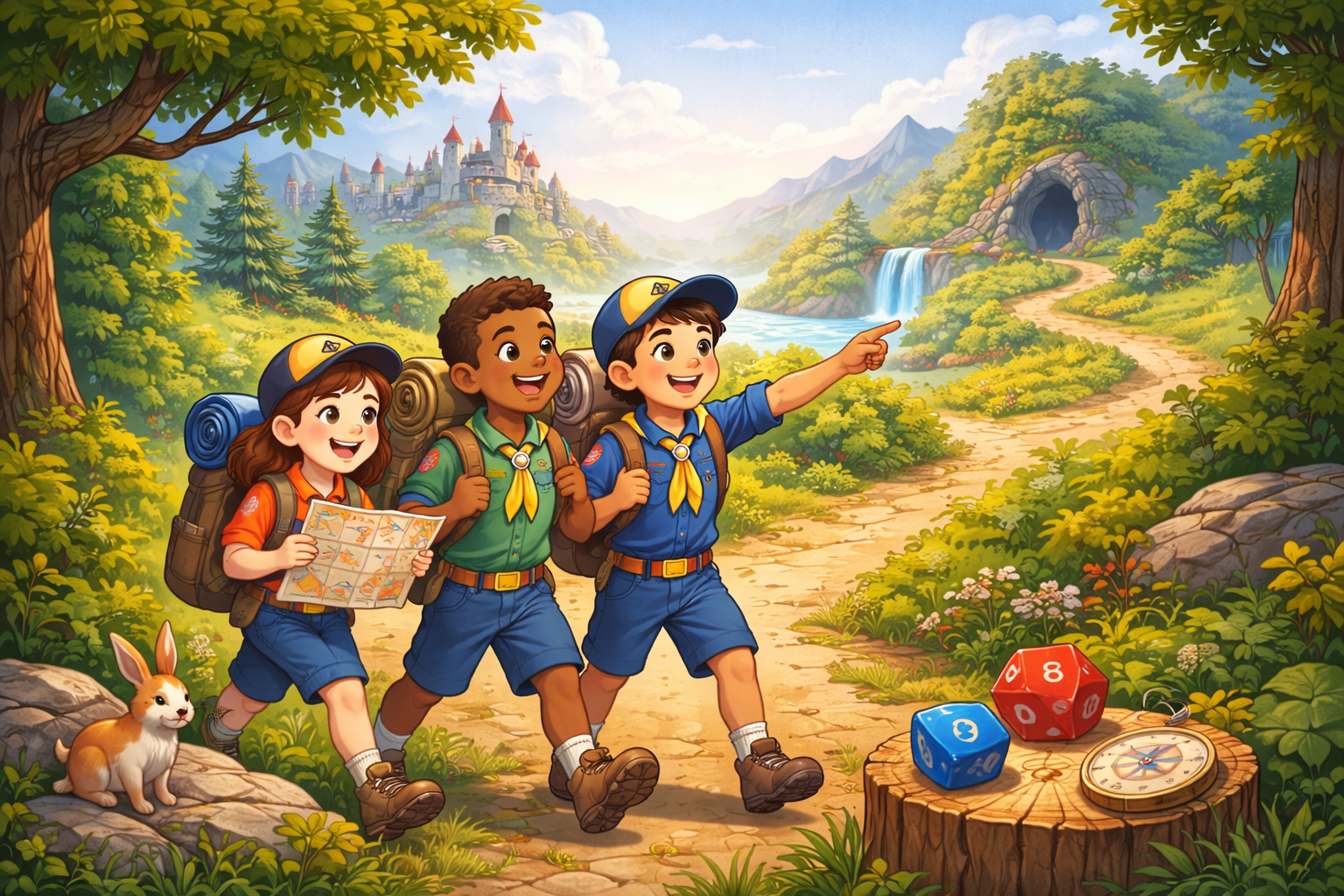
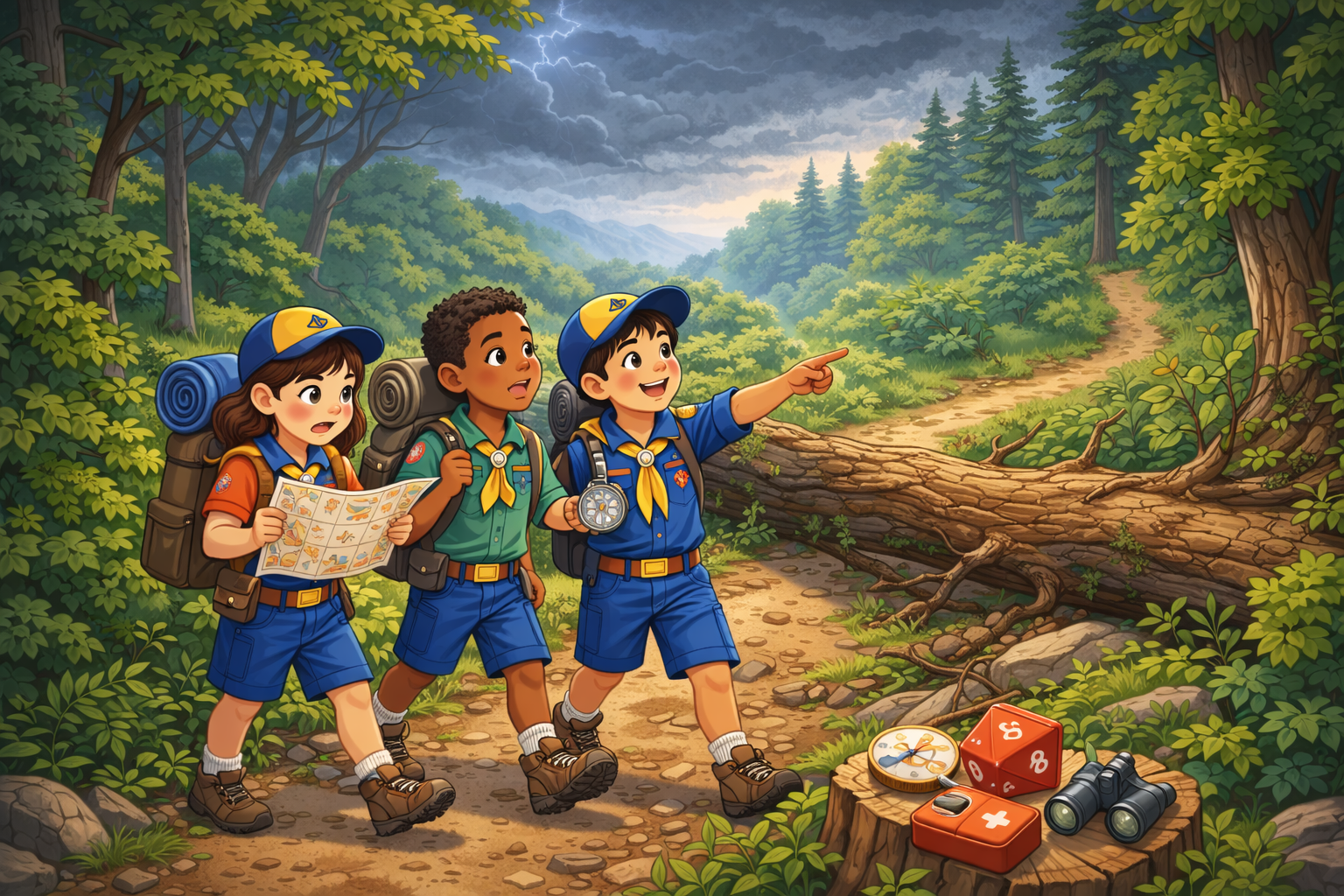
- The Lost Trail - Hiking & Navigation
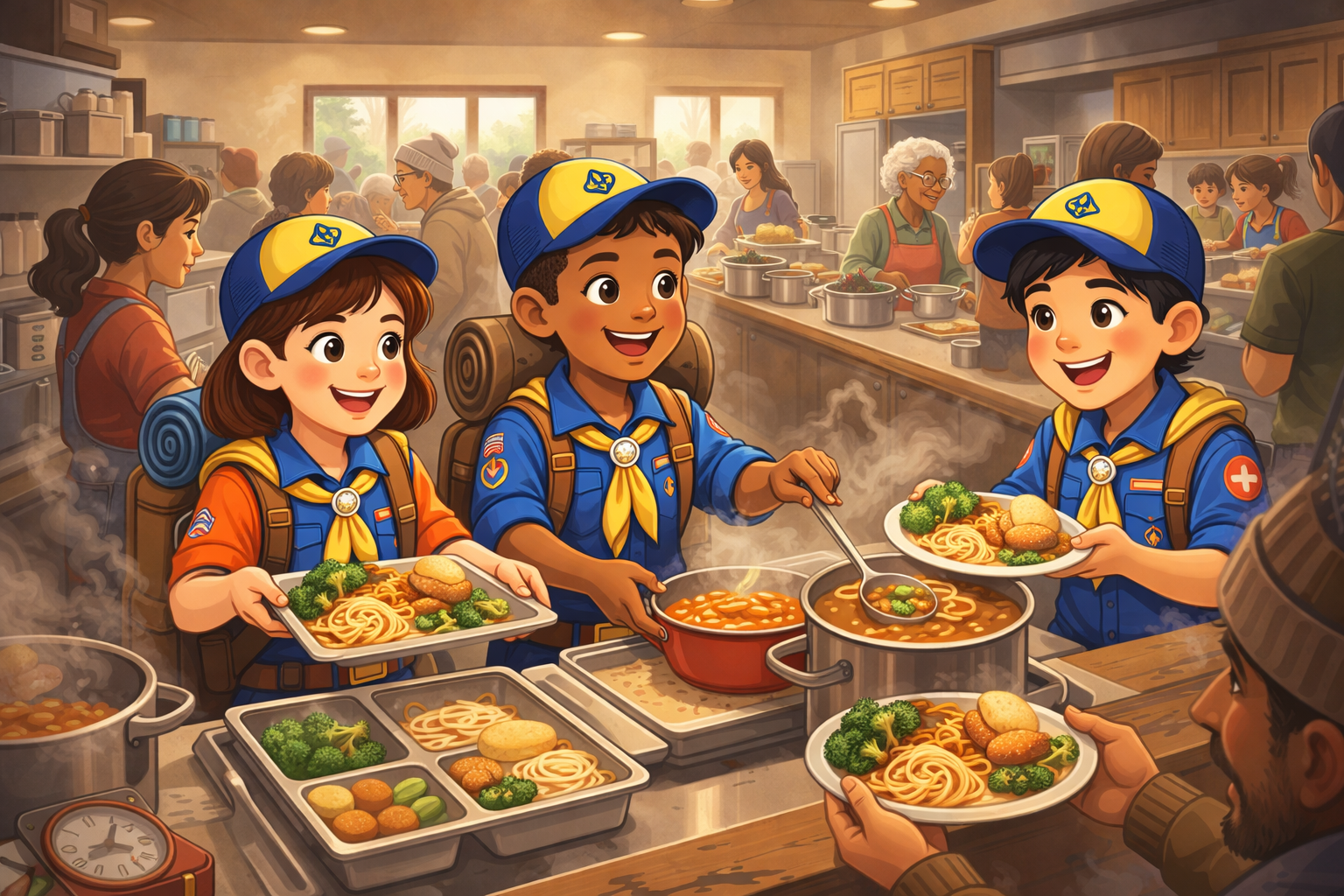
- The Community Kitchen - Service & Teamwork
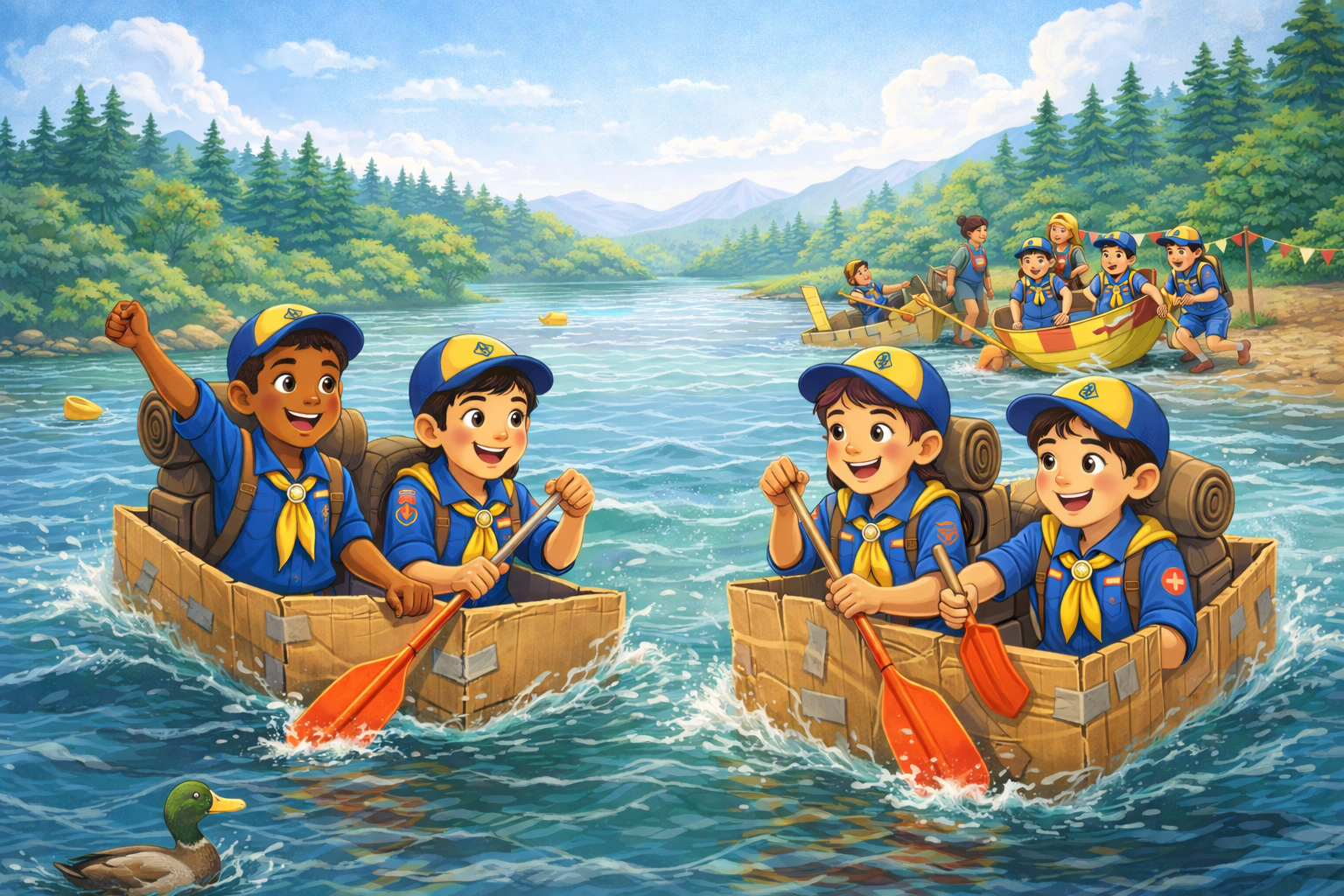
- The Cardboard Regatta - Engineering & Competition
Created by Kreators Guild for BSA Cub Scouts. Adaptable for any youth group, classroom, or family game night. Modify freely for your needs!